

Migration, “Crisis,” and the View from the Margins

In 1974, Britain appeared to move from one crisis to the next: fuel shortages, miners’ strikes, IRA bombings and rolling power cuts dominated the headlines. Politicians warned of a country on the brink. Yet from the perspective of London’s migrant communities, the story looked different. What was framed as a national “crisis” often appeared instead as the continuation of inequalities that had long characterized everyday life.
Once we begin to read history from the margins, “crisis” dissipates. It blends and dilutes into longer threads of passion, pain and protest.
Dominant histories are produced through rupture. There is always a before crisis and an after crisis. Everything else falls in between and is thus determined by this divide of crisis. Take, for example, the formulaic “prewar,” “postwar,” and “interwar” periodization.
Migrating Away from “Crisis” Narratives
Media commentators, politicians and academics commonly link migration to crisis. In migration studies, migrants, especially since 2015, have increasingly been portrayed, both deliberately and unintentionally, as motors of “crisis.” From a well-intended humanitarian crisis narrative to an ill-meaning refugee crisis narrative, migrants are often cast either as the victims of crisis or its instigators. In the process, historical nuances are lost, and everyday human experiences of resistance and radical optimism are often ignored.
Deconstructing “Crisis” Narratives
In 1974, London appeared to be facing crisis after crisis. A petrol embargo triggered fuel shortages, miners’ strikes disrupted daily life, IRA bombings linked to the Northern Ireland conflict shook the city, and power cuts left large parts of London in the dark. At the same time, global conflicts and governmental change fed a growing sense of national instability. As the dominant narrative goes, the “Big Smoke” was quite literally burning out.
Yet this narrative assumes a shared national experience of crisis. In a city marked by migration, by people often considered “non-natives” (see Akala, 2019), the idea of a single, homogeneous crisis becomes much harder to sustain.
Moving Toward Counternarratives
First-generation migrants whose papers routinely denote a foreign identity, second-generation migrants whose foreignness competes with a British identity, and undocumented persons all lived through 1974, alongside other Londoners.
Seen from the perspectives of the marginalized, the story of 1974 looks different from the dominant narrative of crisis.
Oral histories and migrant community newspapers reveal how politically active migrant groups experienced London in 1974.
Reevaluating “Crisis” Narratives from the Margins
Crisis narratives are dictated by the privileged (Strolovitch, 2003).
Firstly, state-sanctioned crises are experienced differently by those already living with structural inequality based on nationality, migration status, race, ethnicity, and religion.
Shortages in energy, employment, housing, and public support may intensify during moments labeled as crisis, but such precarity has long been part of everyday life within unequal and racialized systems. For marginalized communities, such realities do not therefore radically alter daily life in the same way they do for the social elites who primarily define and narrate these events as crisis.
Secondly, moments described as crises can be windows of opportunity for migrant activism. Periods of heightened political tension can generate momentum for organizing and resistance. Broader social discontent may be mobilized to challenge everyday discrimination highlighted by crisis narratives.
At the same time, the public focus on large-scale crises can divert attention from smaller activist groups, allowing them to organize, gather resources, and build networks largely unchallenged and undetected. Such moments can also foster intergroup and intercultural solidarity building along the lines of political affinity.
Thirdly, the diasporic connections influence how a crisis is perceived and interpreted. For many migrants, experiences in London were and still are closely connected to global political developments. Being attentive to events abroad could create distance from what was happening on a national and local level.
For many politically engaged migrant-led movements, activists, and grassroots newspapers, this often fostered skepticism toward official narratives of crisis and an intentional distancing from Britain as a former colonizer.
It could also encourage sympathy or understanding for actions of other groups scapegoated and villainized by the state, such as Irish freedom fighters, oil-producing states involved in the embargo, or striking miners framed as part of a broader struggle against economic injustice.
Reassessing Crisis Narratives and Writing More Rounded Histories
What does it look like to re-imagine a history outside the confines of crisis narratives?
Migrant voices can help bring into view experiences that have often been marginalized or simply erased from historical accounts.
Dominant discourses have historically failed to acknowledge the importance of transnational ties and diasporic identities, while also conveniently ignoring the colonial contexts that shaped these experiences. When events are examined from the margins rather than the center, crisis narratives become far less straightforward.
The perspectives manifested in newspapers established by migrant groups, and in interviews conducted by me or featured in alternative literature, paint a more colorful and complete picture of London in 1974: one lived through resistance to systemic discrimination and the building of social movements. They reflect an embodied experience of being rejected by a place – London, Britain – and rejecting it, along with its “crisis” narratives, in return.
Narratives left out of the mainstream historical record disrupt and resist the simplification of crisis. Counternarratives challenge the very construction of crisis and invite us to reconsider a past too often considered as a single, monolithic story of crisis.
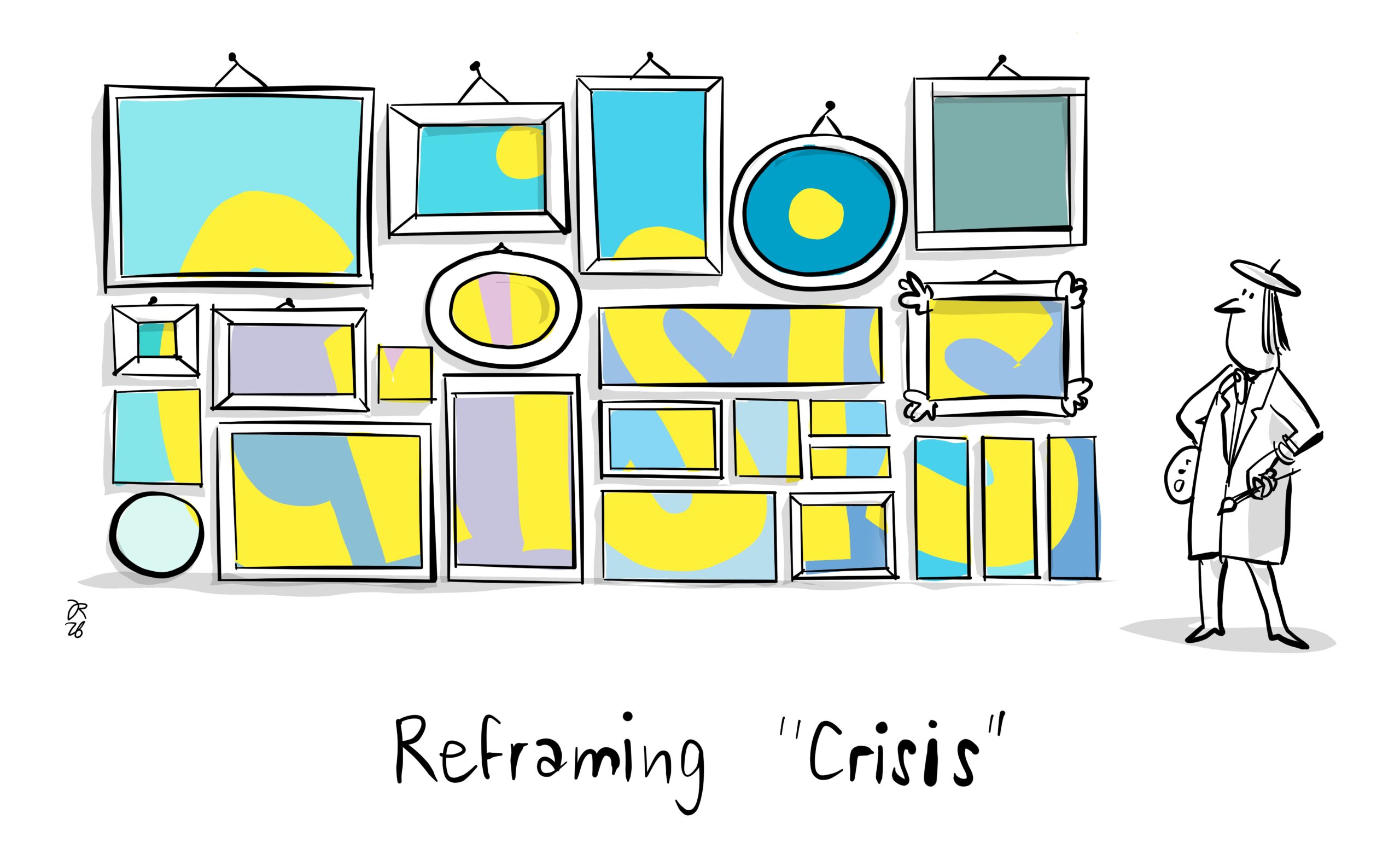
Illustration: Jonas Raeber
Note: All migrants I interviewed were from prior British colonies and born citizens of the UK (this includes Irish and Caribbean).
Carol Pierre is a Doctoral Researcher at the Swiss Forum for Migration and Population Studies, at the University of Neuchâtel, and a fellow of the nccr – on the move: A passion for communicating people’s histories is born from the desire to contextualize, with nuance, current socio-political realities.
